
Rohingya Refugees
The humanitarian emergency
Rohingya refugees have been fleeing violence in Myanmar at a staggering rate – and the numbers keep growing.
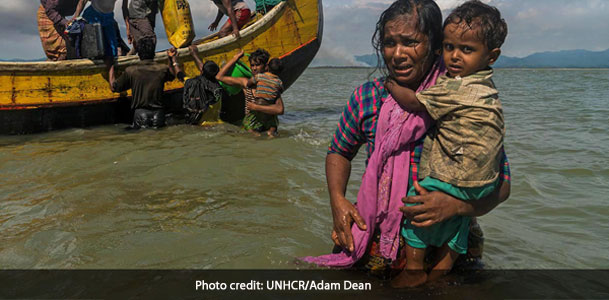
They walk for days through jungles and mountains, or brave dangerous sea voyages across the Bay of Bengal. They arrive exhausted, hungry and sick – in need of international protection and humanitarian assistance.
According to UNHCR, over 742,000 refugees have fled to Bangladesh since 25 August 2017.
Violence in Myanmar’s northern Rakhine State has been brewing for years, and the most recent outbreak has resulted in an influx of Rohingya refugees to Cox’s Bazar across the border in Bangladesh.
Background
The Rohingya are a stateless Muslim minority in Myanmar. The latest exodus began on 25 August 2017, when violence broke out in Myanmar’s Rakhine State. The vast majority of Rohingya refugees reaching Bangladesh are women and children, including newborn babies. Many others are elderly people requiring additional aid and protection.
The two existing refugee camps of Kutupalong and Nayapara, established in the 1990s, were already home to over 33,000 Rohingya refugees before this influx. Now the camps’ population has soared to an estimated 77,000, well beyond existing capacity, with many new arrivals taken in by refugee families or hosted in the camps’ schools, community centres and other covered structures.
The vast majority of newly arriving refugees are now living outside the camps, in makeshift settlements and temporary shelters – often nothing more than tarpaulin held on bamboo poles. Infrastructure and services are overstretched. Other refugees continue to arrive in extremely poor condition.